
Menu
What is Height Increase Surgery?
Height increase surgery, medically known as limb lengthening surgery, is an advanced orthopedic procedure designed to gradually increase height by stimulating new bone formation.
This technique has been used for decades to treat limb discrepancies and skeletal conditions. Today, with modern devices and refined surgical protocols, it is also considered for carefully selected individuals seeking cosmetic height enhancement.
The procedure is highly structured, medically supervised, and involves a gradual bone distraction process that allows new bone tissue to form naturally.
What Conditions Can It Address?
Limb Length Discrepancy
Correction of unequal leg lengths due to congenital or acquired conditions.
Genetic Growth Disorders
Including certain forms of dwarfism and growth-limiting syndromes.
Skeletal Deformities
Such as bow legs or structural asymmetry affecting mobility or posture.
Post-Traumatic Bone Shortening
Restoration of bone length lost due to injury or fractures.
Cosmetic Height Enhancement
For adults seeking stature improvement after growth plates have closed.
Height Increase Surgery Methods
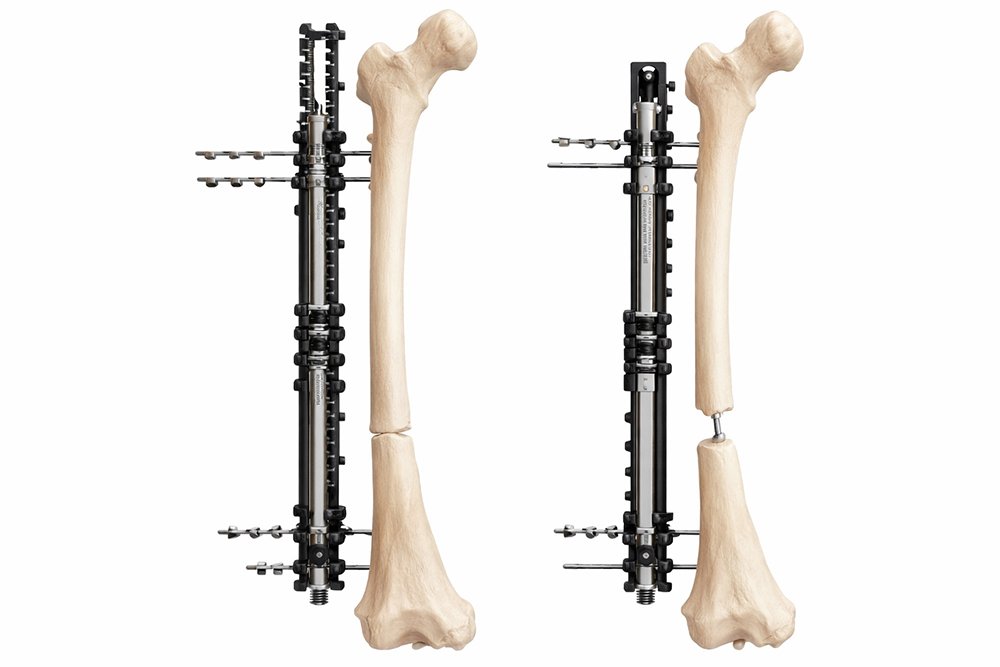
Internal Lengthening Devices
Motorized nails placed inside the bone (e.g., magnetic lengthening systems). These offer greater comfort and reduced external apparatus.
External Fixation Systems
An external frame gradually lengthens the bone in controlled increments.
The appropriate method depends on medical history, bone quality, desired height increase, budget considerations, and surgeon evaluation. A detailed orthopedic consultation is required before selecting a technique.
How Does the Procedure Work?
Height increase surgery is performed in carefully monitored stages:
Stage 1 – Osteotomy
The bone is precisely divided to create a controlled separation.
Stage 2 – Lengthening Phase
A device gradually separates the bone ends (typically ~1mm per day), allowing new bone tissue to form.
Stage 3 – Consolidation Phase
The newly formed bone strengthens and stabilizes.
Stage 4 – Rehabilitation
Structured physiotherapy ensures mobility, flexibility, and safe recovery.
The entire process requires patience, discipline, and medical supervision.
Who May Be an Ideal Candidate?
Are 18+ years old (growth plates closed)
Are in good overall health
Have realistic expectations
Are committed to rehabilitation
Have no uncontrolled medical conditions affecting bone healing
Final eligibility is determined only after medical evaluation.
Height Increase Surgery Cost in India
Cost Factors
Type of device (internal systems are typically more advanced), number of limbs treated, hospital infrastructure, surgeon experience, and post-operative rehabilitation plan.
For an individualized estimate, consultation is required.
→ Request Cost Estimation